



Annexin A
AnxA
Annexin A (AnxA) family, the well-known Ca2+ phospholipid-binding protein, have many functions in regulating inflammation-related enzymes and cell signaling transduction, thus influencing cell adhesion, migration, differentiation, proliferation and apoptosis.
Annexin A Isoform Specific Products
-
Annexin A
(17)
View all products
-
AnxA1
(5)
View all products
-
AnxA3
(2)
View all products
-
AnxA4
(1)
View all products
-
AnxA6
(1)
View all products
-
AnxA7
(1)
View all products
-
AnxA8
(1)
View all products
-
AnxA9
(1)
View all products
-
AnxA10
(1)
View all products
-
AnxA11
(1)
View all products
-
AnxA13
(1)
View all products
All Product Categories
-
Annexin A Related Products (32)
Related Products (32)

-
Annexin A Isoform Comparison
- 1
- 2
-
Ac2-26
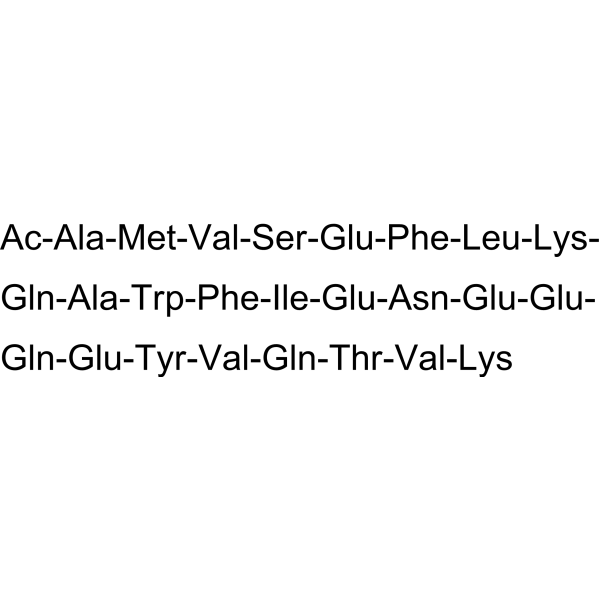 0 ImagesAc2-26 is the N-terminal peptide of annexin 1, and has anti-inflammatory activity. Ac2-26 induces a decrease in IKKβ protein in lysosomes by chaperone-mediated autophagy (CMA). Ac2-26 ameliorates lung ischemia-reperfusion injury. Ac2-26 also inhibits airway inflammation and hyperresponsiveness in an asthma rat model.
-
Linsidomine hydrochloride
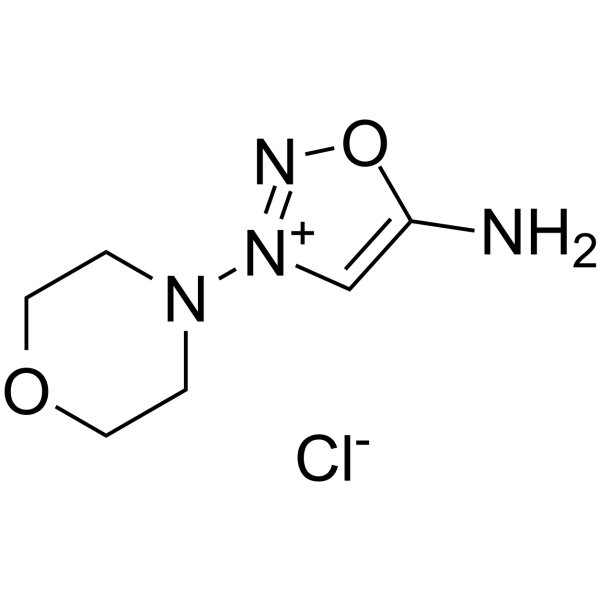 0 ImagesSynonyms: SIN-1 chlorideLinsidomine hydrochloride (SIN-1 chloride) is a spontaneous ROS/RNS generator and peroxynitrite donor. Linsidomine hydrochloride is a vasodilator and platelet aggregation inhibitor. Linsidomine hydrochloride induces oxidative stress-induced chondrocyte apoptosis and necrosis. Linsidomine hydrochloride inhibits the migration, proliferation and neointima formation of vascular smooth muscle cells by inhibiting the expression of annexin A2. In addition, low doses of Linsidomine hydrochloride shows protective effects on Zn2+ treated nerve cells.
-
Ac2-26 TFA
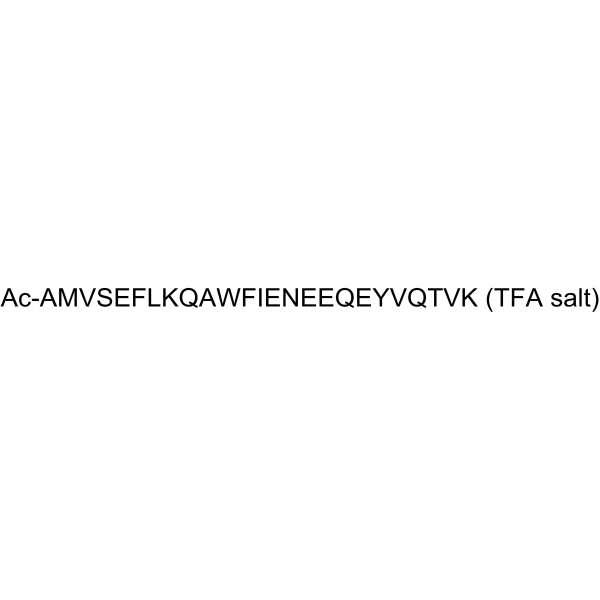 0 ImagesCat. No.: HY-P1098APurity: 98.09%Ac2-26 TFA is the N-terminal peptide of annexin 1, and has anti-inflammatory activity. Ac2-26 induces a decrease in IKKβ protein in lysosomes by chaperone-mediated autophagy (CMA). Ac2-26 ameliorates lung ischemia-reperfusion injury. Ac2-26 also inhibits airway inflammation and hyperresponsiveness in an asthma rat model.
-
Amesotatug
 0 ImagesCat. No.: HY-P992100CAS No.: 3051777-50-2Amesotatug is a humanized monoclonal antibody and ANXA1 binder. Amesotatug binds to Homo sapiens ANXA1 and exhibits antineoplastic activity. Amesotatug can be used for the research of cancer.
-
PF-04217903
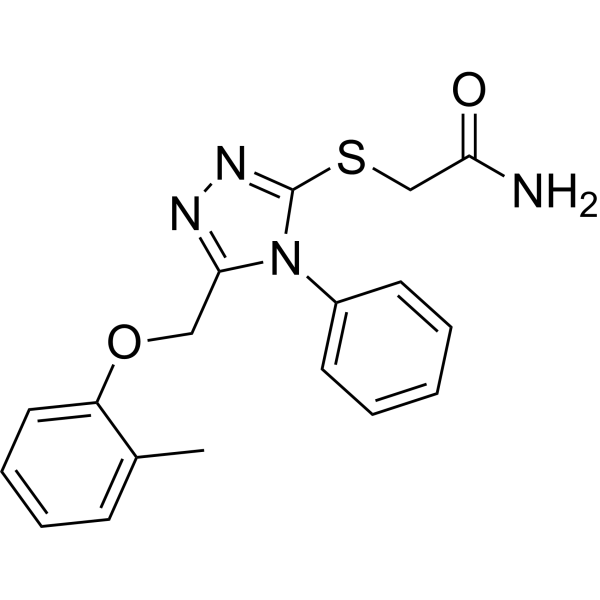
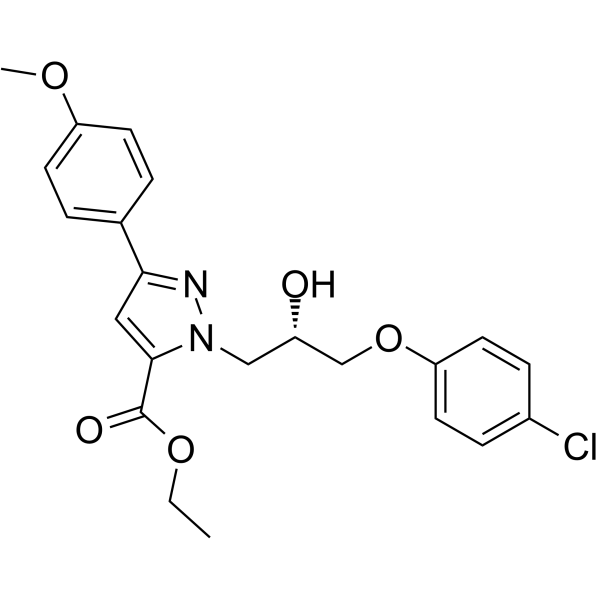
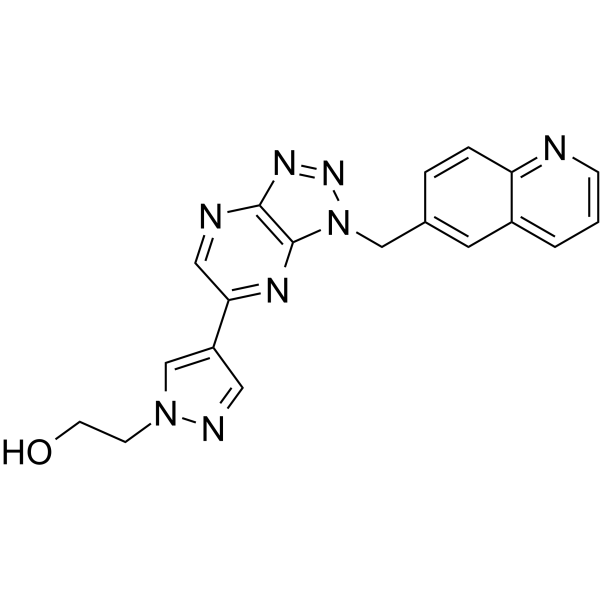 0 ImagesPF-04217903 is an orally active, highly selective ATP-competitive c-Met kinase inhibitor with a Ki value of 4.8 nM and a Kd value of 4.5 nM. PF-04217903 blocks c-Met and HGF signaling pathways, inhibits MET phosphorylation, and blocks downstream MAPK, PI3K/AKT and PLCγ1 pathways. PF-04217903 suppresses tumor proliferation, survival, migration, invasion, angiogenesis and metastasis, induces apoptosis, and enhances efferocytosis, Annexin A1 expression and resolution of inflammation. PF-04217903 retains activity against several c-Met mutants (M1131T, V1220I, H1094R). PF-04217903 increases the incidence of subarachnoid hemorrhage and reduces survival rate without altering aneurysm formation, and also prevents lymph node metastasis induced by VEGF inhibition. PF-04217903 is applicable to research related to tumors (pancreas, stomach, lung, brain, colon, breast, kidney, melanoma, etc.), intracranial aneurysms and inflammatory diseases (gouty arthritis, neutrophilic pleuritis).
-
A11
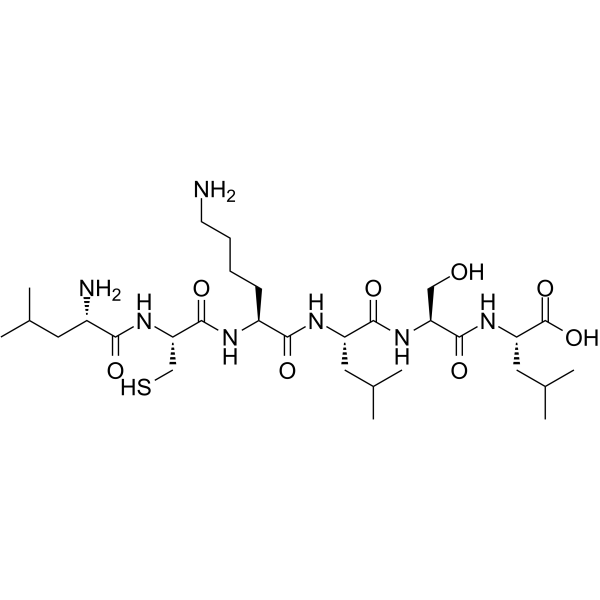
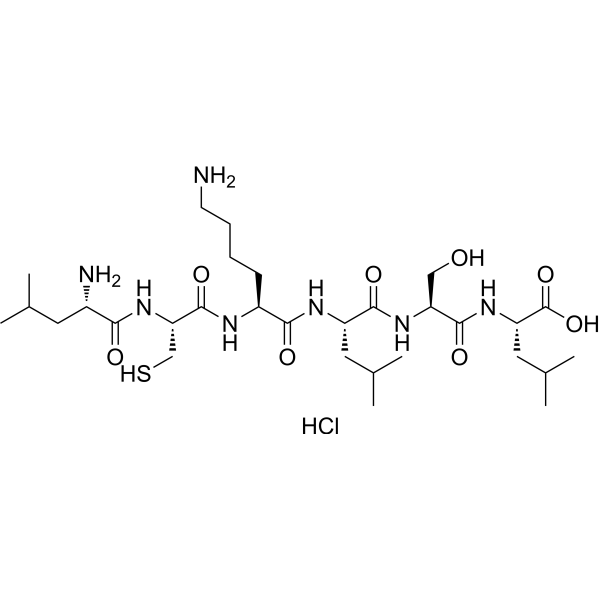
 0 ImagesSynonyms: ANXA1-derived 11 amino acid-long peptideA11 (ANXA1-derived 11 amino acid-long peptide) is a ANXA1-EphA2 interaction-blocking peptide. A11 reduces ANXA1 bound to EphA2 and increases Cbl (the E3 ubiquitin ligase of EphA2) bound to EphA2. A11 inhibits the proliferation, migration and invasion of nasopharyngeal carcinoma cells. A11 inhibits angiogenesis. A11 can be used in studies related to nasopharyngeal carcinoma.

-
I194496
 0 ImagesI194496 is a potent cystathionine γ-lyase (CSE) inhibitor, with an IC50 of 0.79 mM. I194496 can inhibit the growth of human TNBC cells via the dual targeting PI3K/Akt and Ras/Raf/ERK pathway and suppress the metastasis of human TNBC cells via down-regulating Anxa2/STAT3 and VEGF/FAK/Paxillin signaling pathways.
-
PF-04217903 mesylate
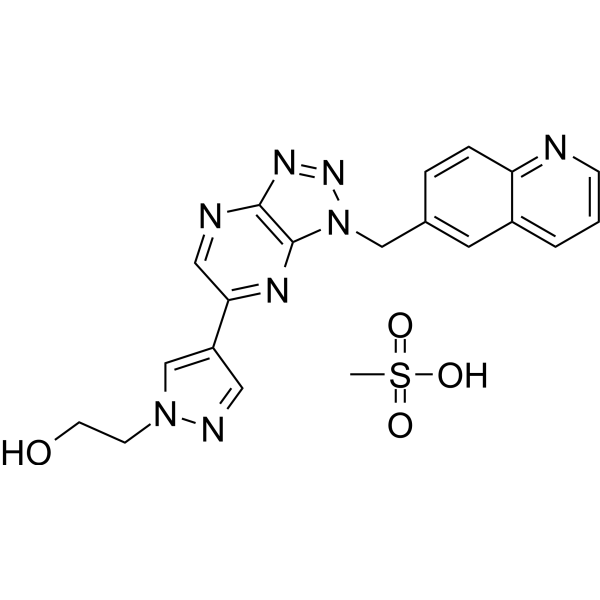 0 ImagesPF-04217903 mesylate is an orally active, highly selective ATP-competitive c-Met kinase inhibitor with a Ki value of 4.8 nM and a Kd value of 4.5 nM. PF-04217903 mesylate blocks c-Met and HGF signaling pathways, inhibits MET phosphorylation, and blocks downstream MAPK, PI3K/AKT and PLCγ1 pathways. PF-04217903 mesylate suppresses tumor proliferation, survival, migration, invasion, angiogenesis and metastasis, induces apoptosis, and enhances efferocytosis, Annexin A1 expression and resolution of inflammation. PF-04217903 mesylate retains activity against several c-Met mutants (M1131T, V1220I, H1094R). PF-04217903 mesylate increases the incidence of subarachnoid hemorrhage and reduces survival rate without altering aneurysm formation, and also prevents lymph node metastasis induced by VEGF inhibition. PF-04217903 mesylate is applicable to research related to tumors (pancreas, stomach, lung, brain, colon, breast, kidney, melanoma, etc.), intracranial aneurysms and inflammatory diseases (gouty arthritis, neutrophilic pleuritis).
-
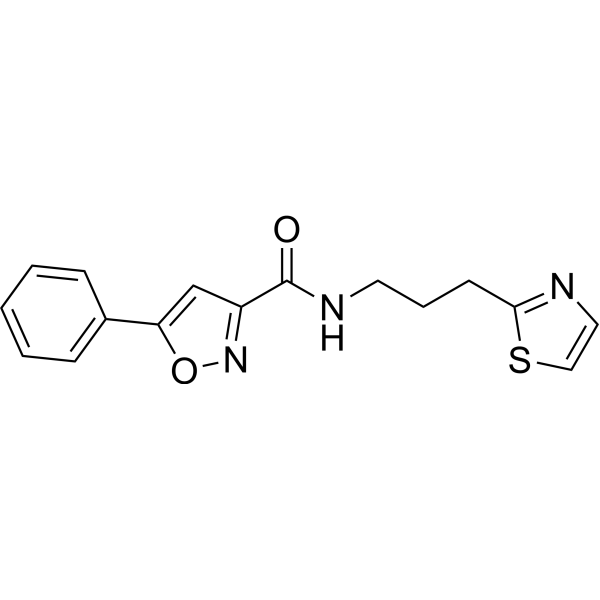
Endosidine 5
 0 ImagesSynonyms: ES5Endosidine 5 (ES5) inhibits EPS (extracellular polymeric substance) secretion and cell wall expansion. Endosidine 5 alters secretion of ECM (extracellular matrix) material in Penium margaritaceum by affecting the Golgi apparatus. Endosidine 5 interferes with recycling endosomes through Annexin A6, thereby promoting the release and expression of mRNA into the cytoplasm.
-
ANXA11 Human Pre-designed siRNA Set A
 0 ImagesCat. No.: HY-RS00759
ANXA11 Human Pre-designed siRNA Set A contains three designed siRNAs for ANXA11 gene (Human), as well as a negative control, a positive control, and a FAM-labeled negative control.
Components
ANXA11 siRNA-1: 5 nmol (HPLC)
ANXA11 siRNA-2: 5 nmol (HPLC)
ANXA11 siRNA-3: 5 nmol (HPLC)
siRNA Negative Control: 5 nmol (HPLC)
FAM-labeled siRNA Negative Control: 5 nmol (HPLC)
GAPDH siRNA Positive Control: 5 nmol (HPLC)
-
PF-04217903 phenolsulfonate
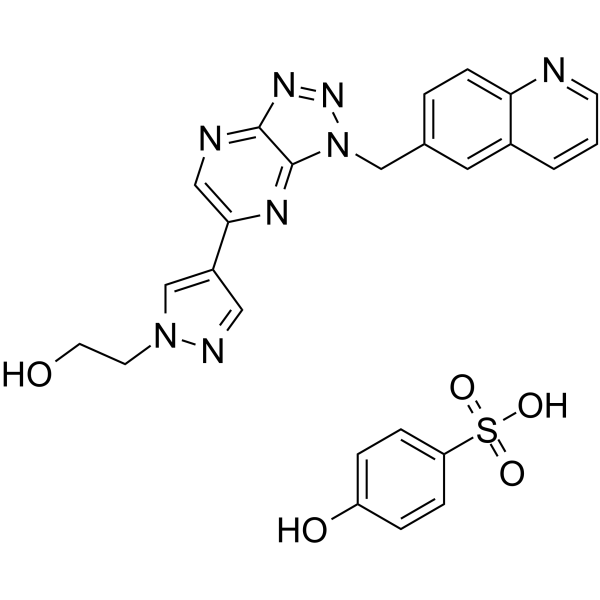 0 ImagesCat. No.: HY-12017BCAS No.: 1159490-85-3PF-04217903 phenolsulfonate is an orally active, highly selective ATP-competitive c-Met kinase inhibitor with a Ki value of 4.8 nM and a Kd value of 4.5 nM. PF-04217903 phenolsulfonate blocks c-Met and HGF signaling pathways, inhibits MET phosphorylation, and blocks downstream MAPK, PI3K/AKT and PLCγ1 pathways. PF-04217903 phenolsulfonate suppresses tumor proliferation, survival, migration, invasion, angiogenesis and metastasis, induces apoptosis, and enhances efferocytosis, Annexin A1 expression and resolution of inflammation. PF-04217903 phenolsulfonate retains activity against several c-Met mutants (M1131T, V1220I, H1094R). PF-04217903 phenolsulfonate increases the incidence of subarachnoid hemorrhage and reduces survival rate without altering aneurysm formation, and also prevents lymph node metastasis induced by VEGF inhibition. PF-04217903 phenolsulfonate is applicable to research related to tumors (pancreas, stomach, lung, brain, colon, breast, kidney, melanoma, etc.), intracranial aneurysms and inflammatory diseases (gouty arthritis, neutrophilic pleuritis).
-
CI-936
 0 ImagesCat. No.: HY-106752CAS No.: 98383-40-5Synonyms: MRS-3310CI-936 (MRS-3310) is an orally active A2 agonist with 25 nM affinity. CI-936 produces potent and selective effects in preclinical tests predictive of antipsychotic efficacy. CI-936 inhibits exploratory activity in mice.
-
(R)-SL18
 0 ImagesCat. No.: HY-168951CAS No.: 3023189-40-1
- 1
- 2



